
Recruitment website design in Southampton

Recruitment website design in Southampton for agencies that need to win candidates and clients at the same time. We build job boards, registration forms and client pages that make your desk easier to run.

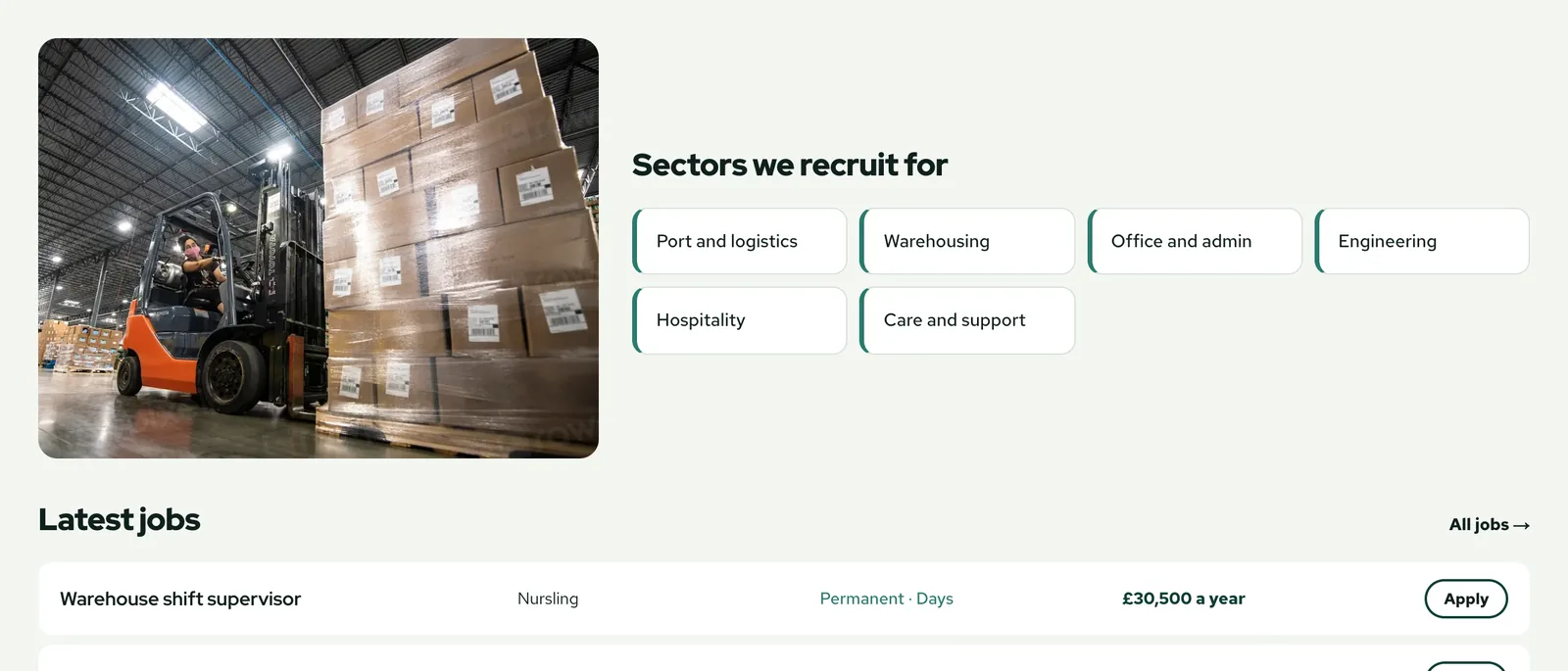
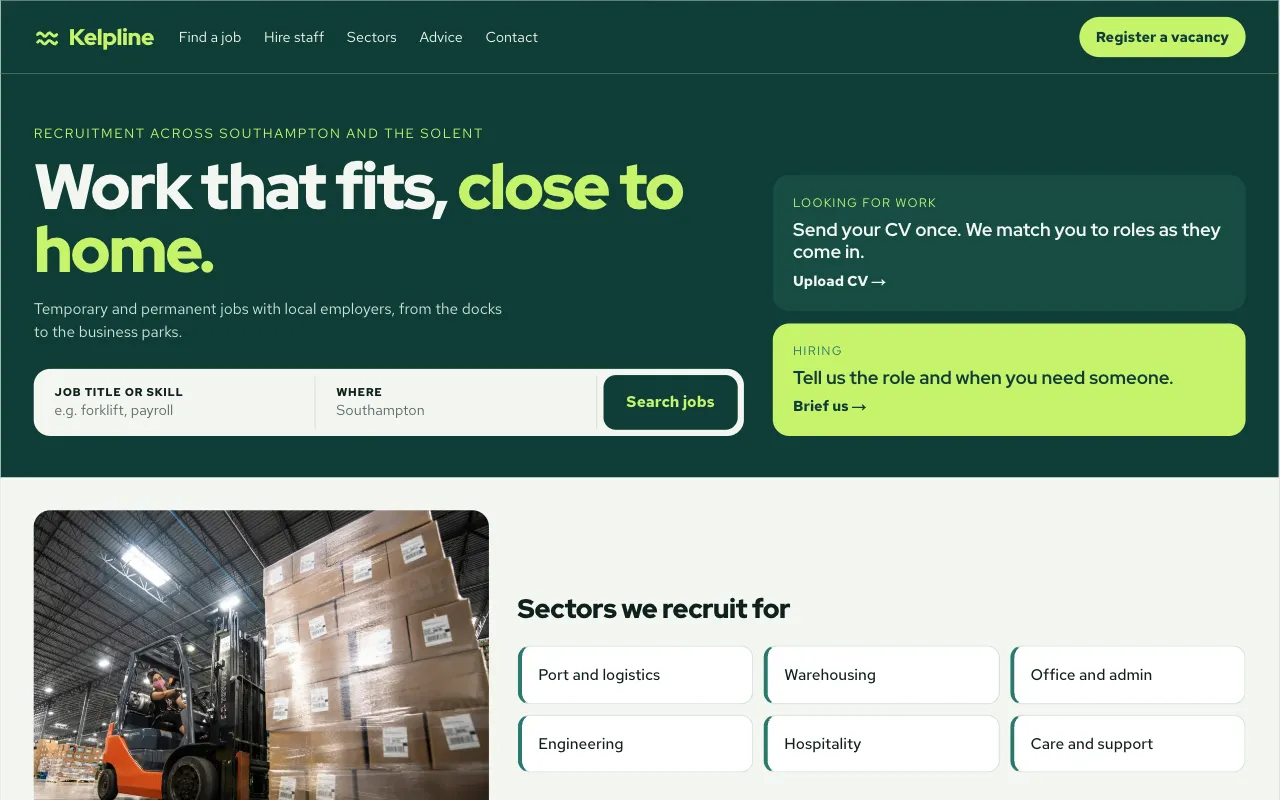
Studio project: Kelpline Recruitment home page on desktop, sectors recruited for and a list of latest jobs with area and pay
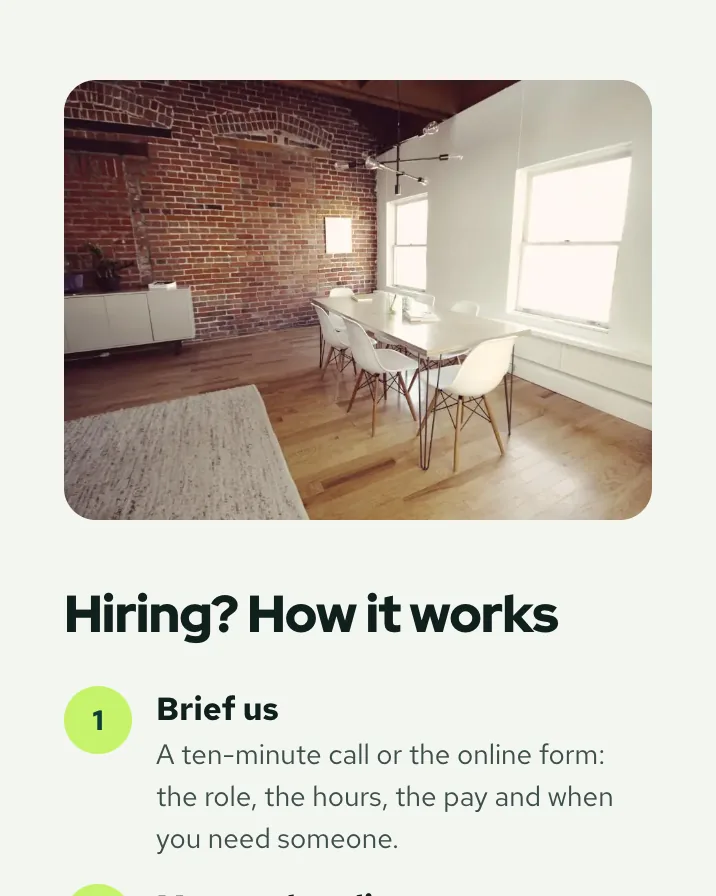
Studio project: Kelpline Recruitment home page on a phone, the three hiring steps for employers

A recruitment website sells twice: to candidates looking for their next role and to employers looking for their next hire.

Most agency sites serve one of those well and the other badly. We plan both journeys from the start, so a candidate can find and apply for a job in a few taps and a hiring manager can see quickly why they should call you.

Recruitment website design for Southampton agencies

Southampton has a busy recruitment market. The port, logistics, engineering, healthcare, education and a large service economy all need people, and agencies across the city compete to supply them. For an agency, the website is often the first thing both a candidate and a client see. If it is slow, out of date or confusing, both go elsewhere.

Good recruitment website design in Southampton starts by accepting that you have two very different visitors.

Candidates arrive on a phone, often from a job search, a social post or a link in an email. They want to see the job, the pay, the location and the hours, then apply in a couple of minutes. Every extra field on the application form loses some of them.

Clients arrive later in the week, usually on a laptop, often after a referral or a search for agencies in their sector. They want to know what you recruit for, whether you understand their industry and how to get a role on your books.

Job pages that get found

A job page is a landing page. It should have a clear title that matches how people search, the location and salary in plain sight, and a short application at the end. We add the structured data Google uses for its job listings and handle expired roles cleanly, so old jobs do not linger in search results and frustrate candidates.

Sector pages that win clients

If you recruit for warehousing and logistics, engineering, office support, care or any other specialism, each deserves its own page. A hiring manager in a Southampton logistics firm should land on a page about logistics recruitment, not a generic "our services" list. These pages also give your agency a chance to rank for the specialist searches that bring in new clients.

Built around how you work

Every agency runs differently. Some post every role on their own site, some only feature the best. Some use a full applicant tracking system, others a spreadsheet and an inbox. We plan the site around your process, connect it to your systems where that is possible and keep the admin side simple so your consultants actually use it.

Data protection from the start

Recruitment sites handle a lot of personal data: CVs, contact details, right-to-work information. We design forms that ask for only what you need, explain clearly why, link to your privacy notice and send the data securely. We are not lawyers, so we recommend your data protection approach is checked by your own adviser.

Next steps

If your agency's website is not pulling in candidates or clients, get in touch. We will look at your current site and job pages and tell you plainly what we would change. You can also read about our web design for Southampton businesses more generally.
Recruitment agency website design

  • Job board

    Vacancies that are easy to post, search and apply for.

    • Search by role, sector and location
    • Job pages that appear in Google job search
    • Expired jobs handled cleanly
  • Candidate journey

    Registration and applications that work on a phone.

    • Short application forms
    • CV upload
    • Job alerts
  • Client pages

    Pages that show employers what you recruit for and how you work.

    • Sector and specialism pages
    • Vacancy submission form
    • Clear terms and next steps
  • Integrations

    Connections to the applicant tracking system you already use, where it allows.

    • Vacancy feeds
    • Applications sent to your system
    • Less copying and pasting

How we build a recruitment site

  1. Map your desks

    We list the sectors, roles and locations you recruit for, and how each should appear on the site.

  2. Plan both journeys

    We design the candidate and client routes separately, then join them up.

  3. Build and connect

    We build the job board and connect it to your systems where possible.

  4. Launch and track

    We set up tracking for applications and client enquiries so you can see what the site delivers.

Questions

Can the site pull jobs from our applicant tracking system?

Often, yes. Many systems offer a vacancy feed or an API. We connect to your applicant tracking system where it offers a job feed or an API, and we confirm what yours supports while scoping the project, before you commit.

Will our jobs show in Google job search?

We mark up each job page with the structured data Google uses for job listings. Google decides what to show, but without that markup your jobs are unlikely to appear there.

How do you handle candidate data?

Forms collect only what you need, explain how the data will be used and link to your privacy notice. CVs and personal details are sent securely to your inbox or system. Your own data protection policy should be checked by your adviser.

We are a small agency. Is a job board overkill?

Not necessarily. Even a handful of live roles can bring in candidates if the job pages are well built. We can start simple and add features as you grow.

Planning a new website?

Tell us what your business does and what the site needs to do. We will reply with a plain answer and a quote.

  • Free, written quote
  • Reply within one working day
  • Meetings on Zoom or Google Meet

We only use your details to reply. Privacy